




For successful seedlings,
see the growing notes at the bottom of the page!
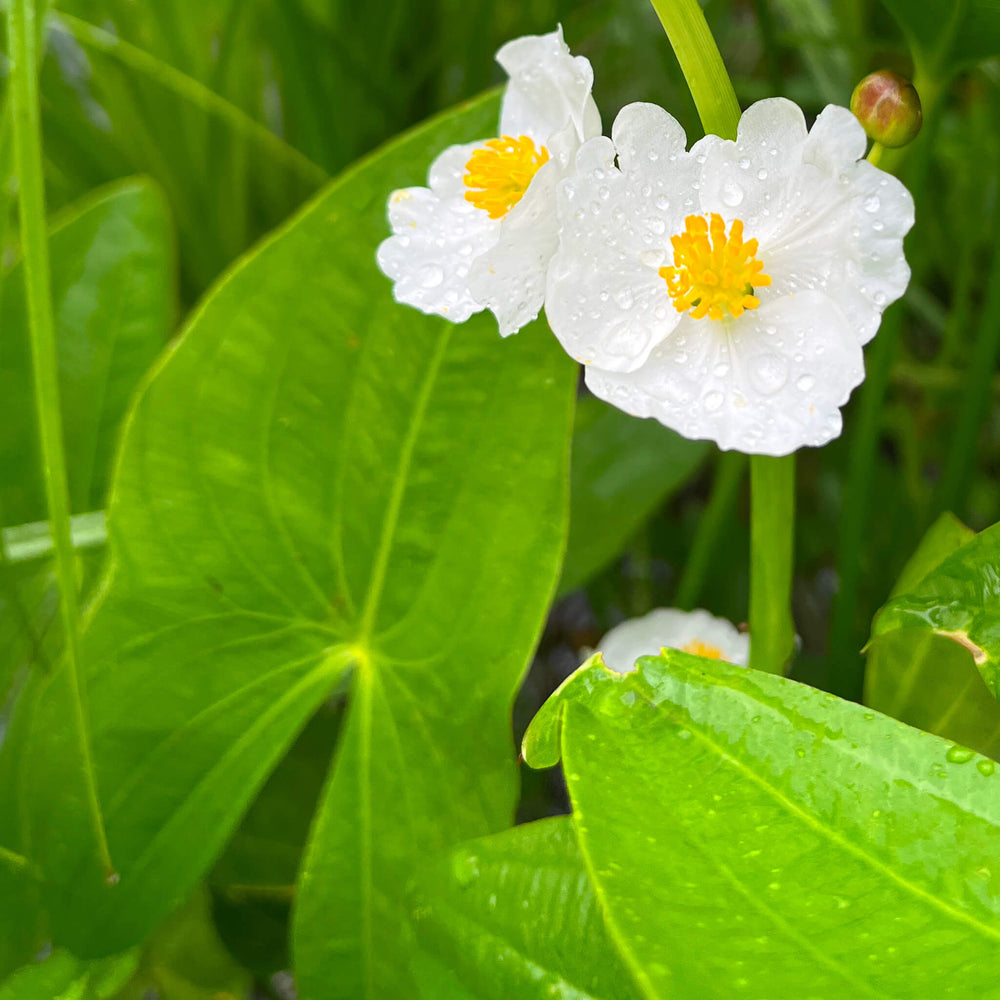
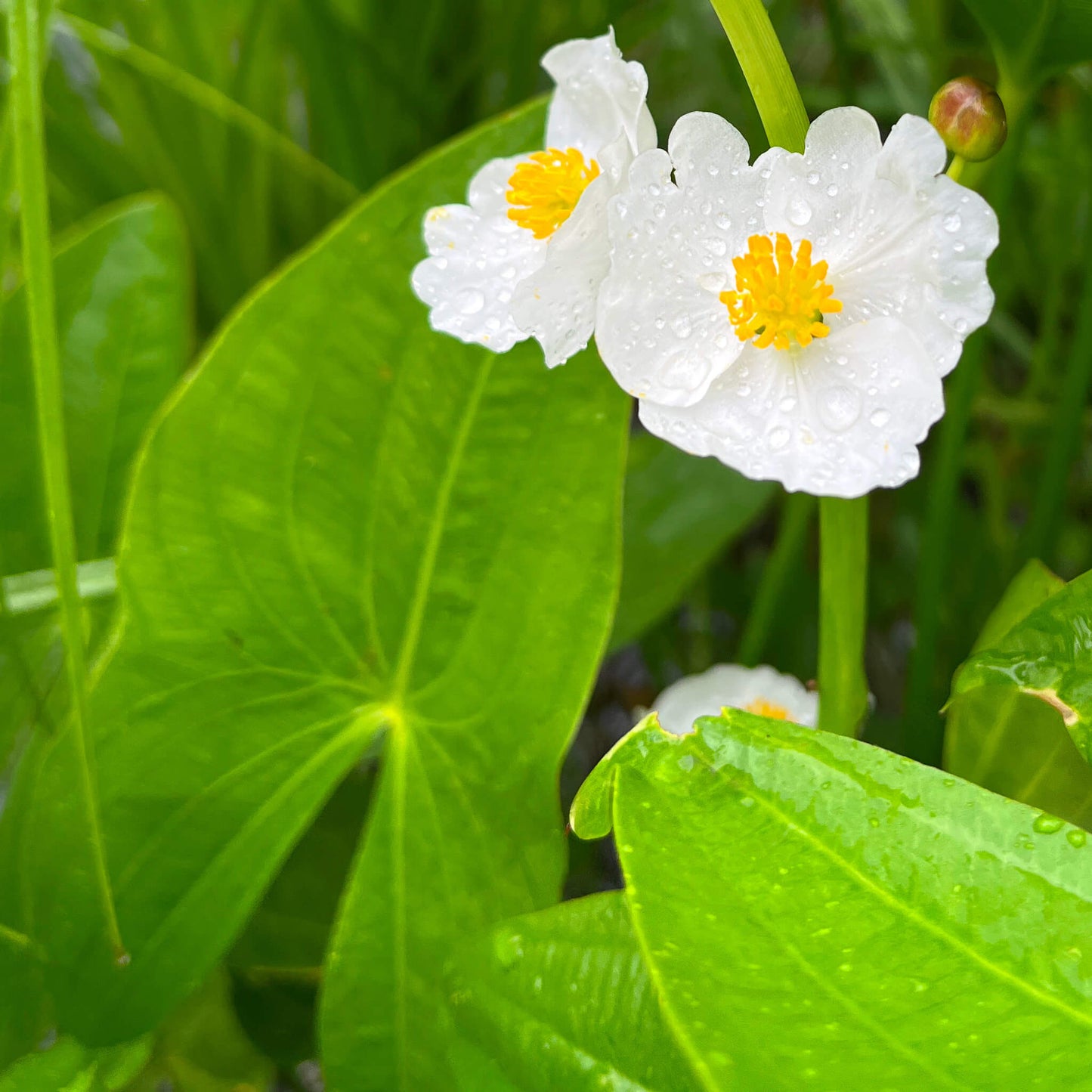
Broadleaf arrowhead (Sagittaria latifolia), also known as common arrowhead, is a perennial aquatic plant that forms colonies along rivers, lakes, and wetlands. It stands elegantly above the water with its large, arrow-shaped leaves. In summer, it produces clusters of white flowers with three petals and three green sepals, atop stems that can reach up to 1.2 metres in height. Adapted to aquatic environments, this plant is ideal for pond or stream banks in water gardens.
Medicinal and Culinary Uses
Broadleaf arrowhead is an edible plant with several consumable parts. Young leaves, shoots, and tender inflorescences can be eaten raw in salads or cooked. However, its tubers, rich in starch, are the most prized part. Once cooked, these tubers have a texture similar to potatoes and can be incorporated into various dishes.
Ecological Roles
Broadleaf arrowhead plays an essential ecological role by supporting wetland biodiversity. Its tubers provide a food source for many aquatic animals, such as ducks, turtles, and various mammals. Additionally, this plant aids in water filtration and oxygenation, helping to remove excess nutrients and impurities. Cultivating the broadleaf arrowhead in aquatic settings supports ecosystem health and stabilizes banks with its robust root system.
Upon receipt, it is important to place the packet containing seeds in the refrigerator until sowing.
Broadleaf arrowhead seeds require cold stratification to ensure germination. See the growing notes below for more details.
Akène cannot assume any responsibility for the use of plants for therapeutic purposes. Always seek advice from a professional before using a medicinal or edible plant.
Sowing and Growing
Technical Details
Seeds per packet: 100
Family: Alismataceae
Scientific name: Sagittaria latifolia
Life cycle: Perennial
Hardiness zone: 3
Soil type: Loamy to clayey
Soil moisture level: Humid to wet
Soil - additional attributes:
Drought tolerance: Low
Light: Sun, part shade
Blooming: July to September
Spacing: 30 cm
Height: 120 cm
Deer resistance: Low
Stratification: 2 x 60 days
Scarification: No
Germination time: 15 to 30 days
Sowing depth: Surface
Reproductive system: Monoecious