







For successful seedlings,
see the growing notes at the bottom of the page!
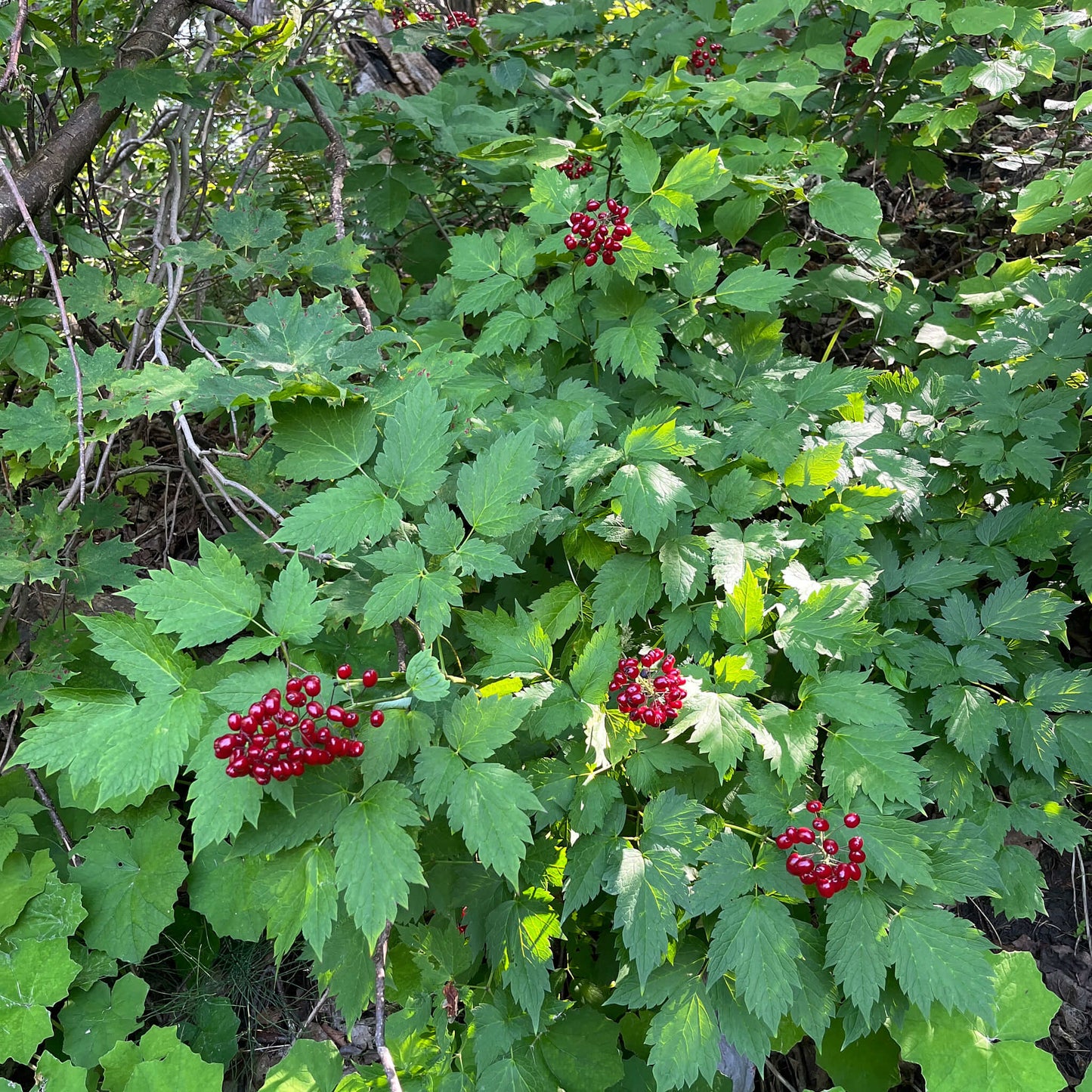
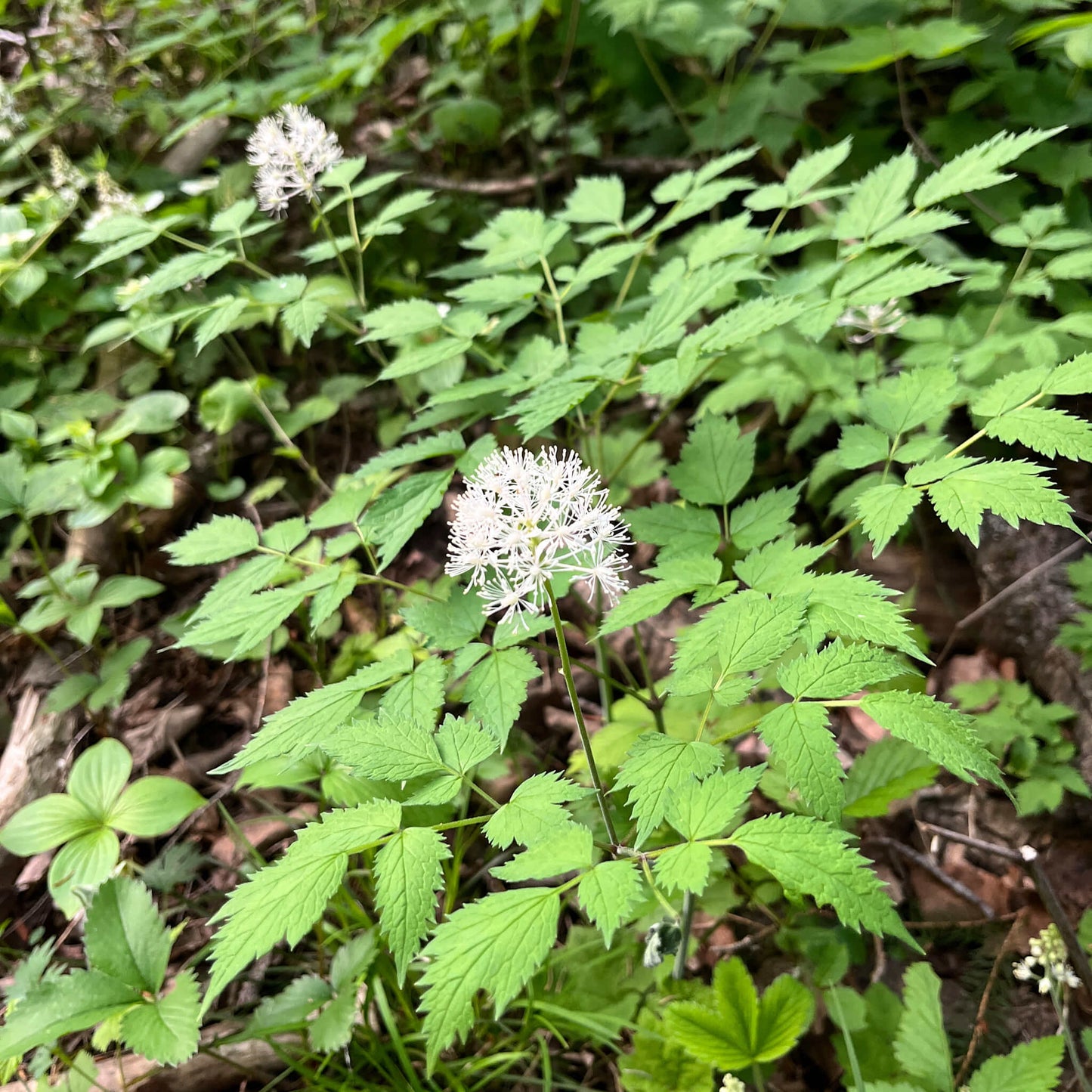
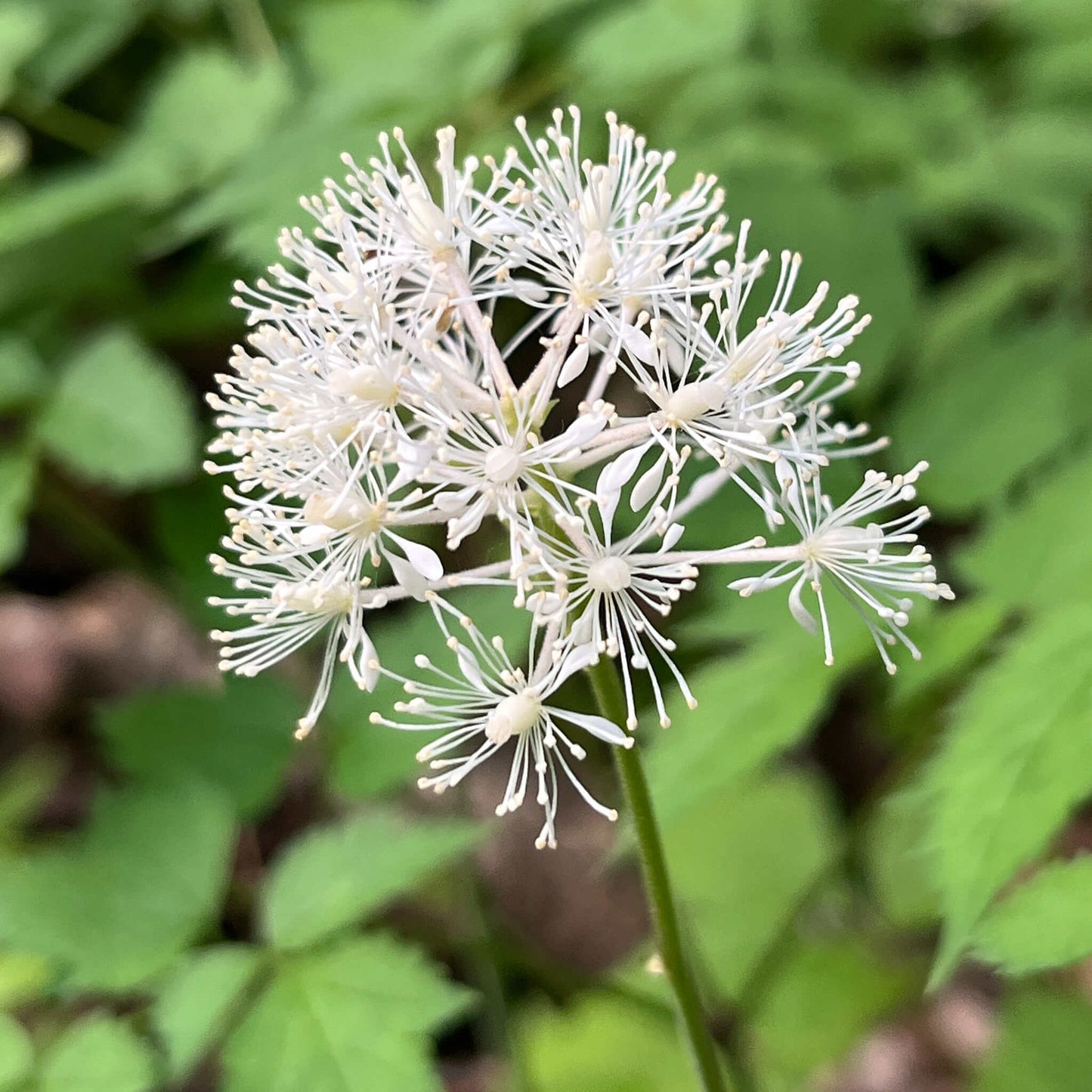
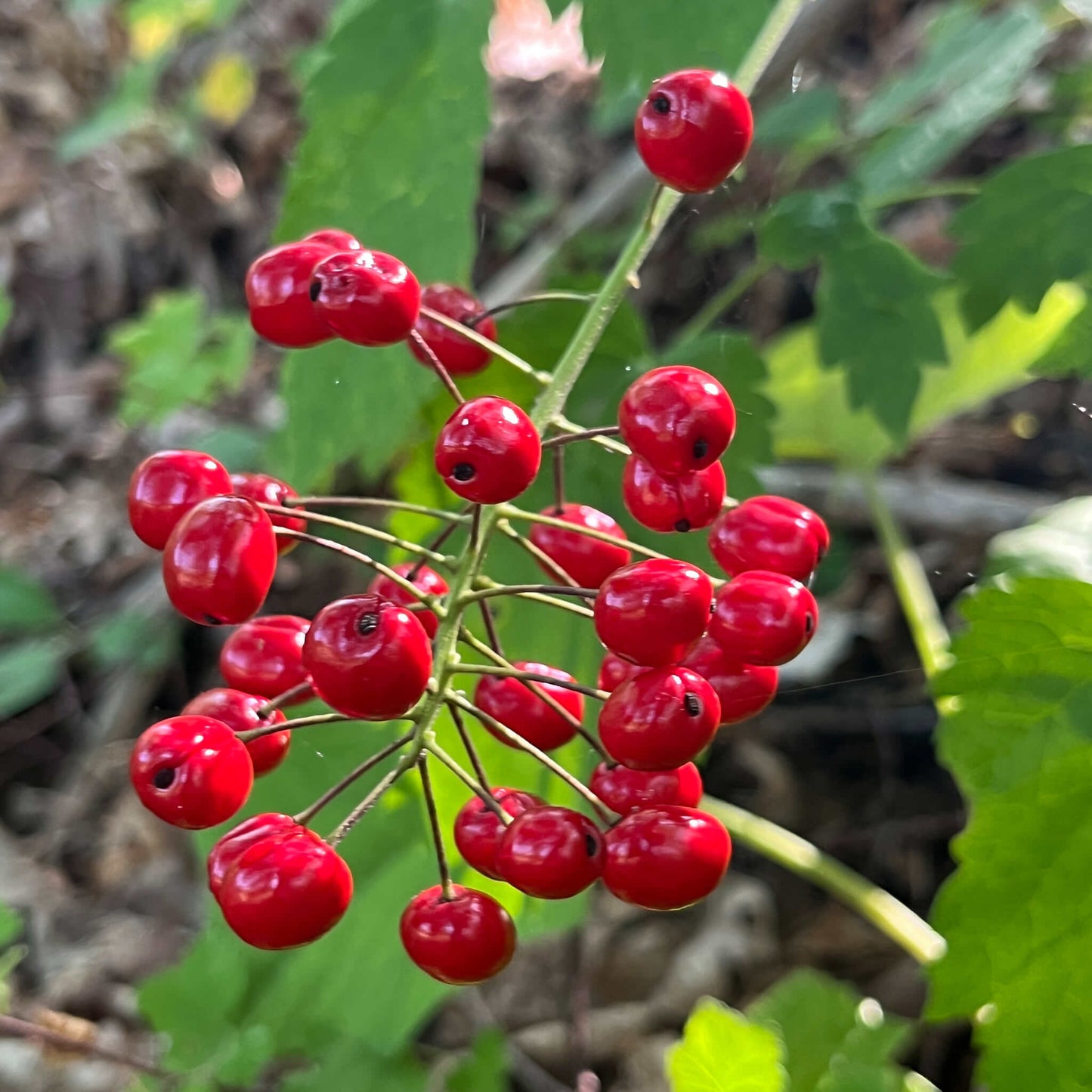
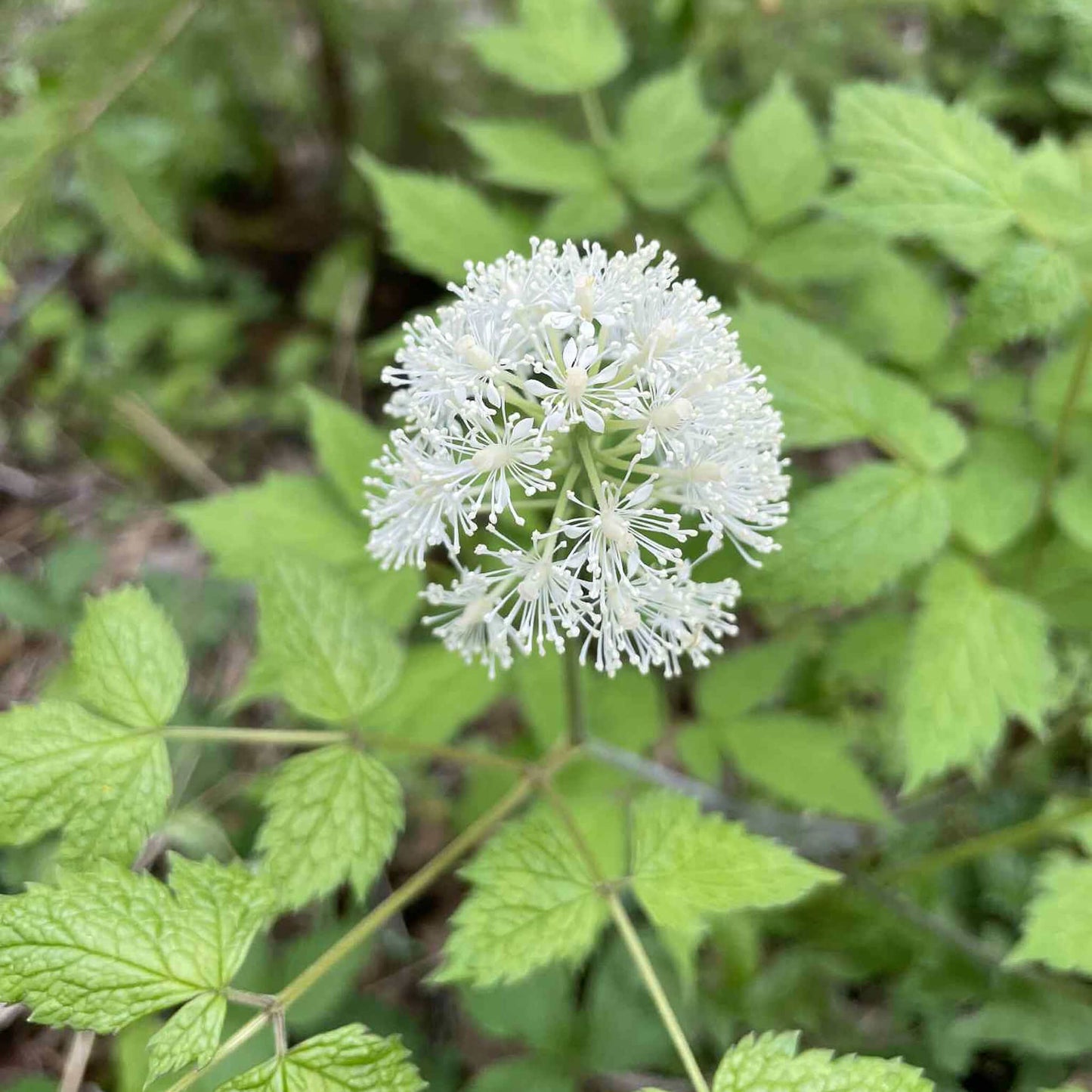
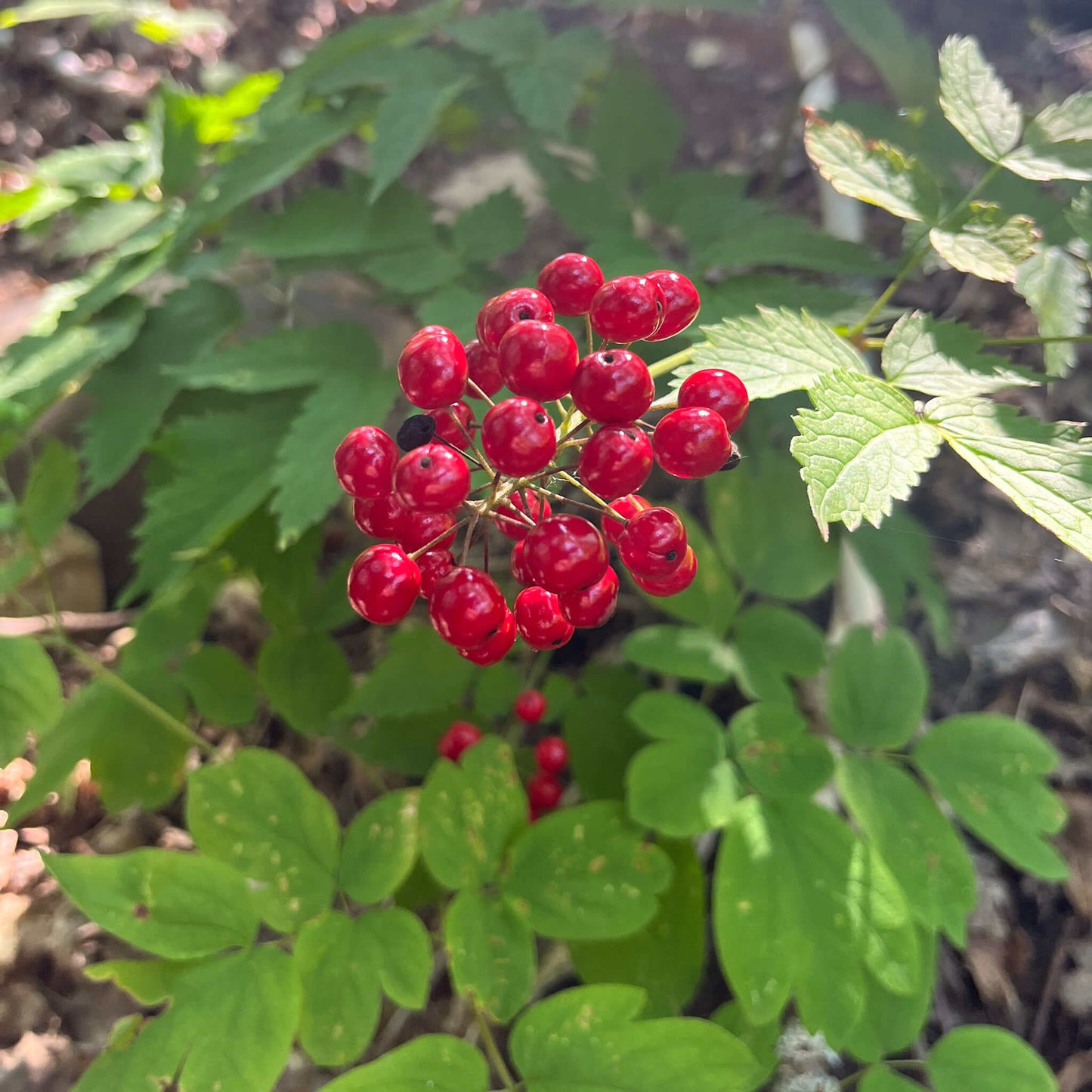
Red baneberry (Actaea rubra) is a woodland perennial herb of the buttercup family, reaching about 60 to 90 cm in height. Its upright, smooth stems bear large leaves that are two to three times compound, with deeply toothed segments giving the foliage a finely divided appearance. Flowering occurs from spring to early summer, forming terminal clusters of small white flowers with long stamens, rising above the foliage. After flowering, bright red globular berries appear, standing out vividly against the woodland background. The species grows in cool and moist forests, shaded edges, ravines, stream banks, and wooded slopes. It prefers humus-rich soils that are fresh to moist, and light to dense shade. In Quebec, it is found in many temperate to cool wooded regions, where it stands out for the brilliance of its fruits and the elegance of its foliage. The berries are toxic to humans, although this does not diminish their ornamental value in natural settings.
Ecological roles
In woodlands, red baneberry contributes to the structural and floristic diversity of forest communities. Its spring inflorescences, although discreet, provide nectar and pollen to various flower-visiting insects early in the season. In summer, its colourful berries serve as a resource for many birds and small mammals, which help disperse the seeds throughout the forest environment. With its preference for cool and moist habitats, the species accompanies other woodland plants and plays a part in the ecological fabric of ravines, shaded slopes, and wooded banks.
Upon receipt, it is important to place the packet containing seeds in the refrigerator until sowing.
Red baneberry seeds require cold stratification to ensure germination. See the growing notes below for more details.
Akène cannot assume any responsibility for the use of plants for therapeutic purposes. Always seek advice from a professional before using a medicinal or edible plant.
Sowing and Growing
Technical Details
Seeds per packet: 25
Family: Ranunculaceae
Scientific name: Actaea rubra
Life cycle: Perennial
Hardiness zone: 4
Soil type: Loamy to clayey
Soil moisture level: Medium to humid
Soil - additional attributes: Humusy. Rich. Well-drained.
Drought tolerance: Moderate
Light: Part shade, shade
Blooming: May to June
Spacing: 50 cm
Height: 90 cm
Deer resistance: High
Stratification: Pre-stratified
Scarification: No
Germination time: 30 to 90 days, sometimes more
Sowing depth: 3 mm
Reproductive system: Self-fertile hermaphrodite