





For successful seedlings,
see the growing notes at the bottom of the page!
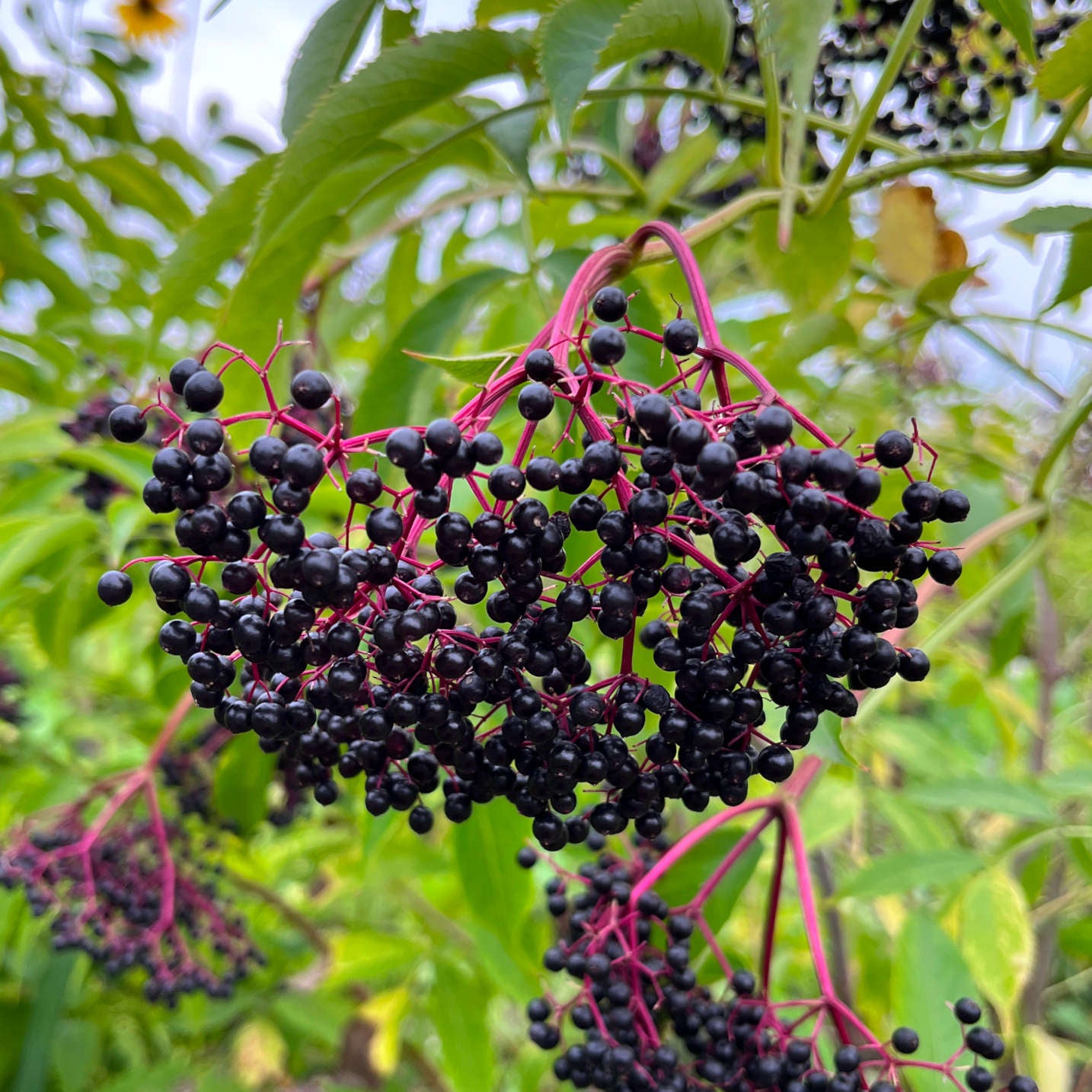
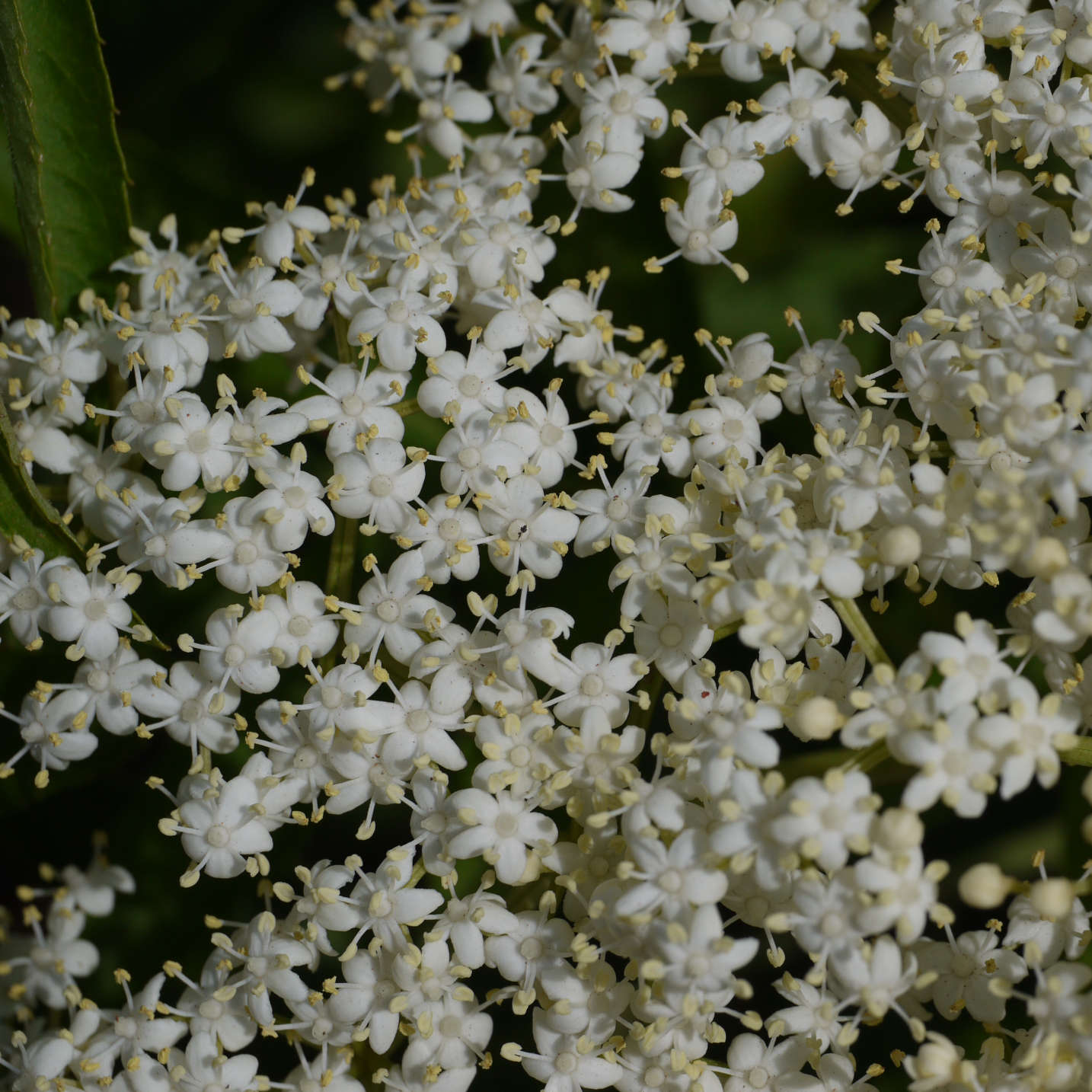
Common elderberry (Sambucus canadensis) is a robust native shrub, typically reaching between 1.5 and 3 meters in height. Its leaves are composed of serrated leaflets arranged oppositely along the stems. In summer, common elderberry produces large clusters of small, fragrant white flowers, which are highly attractive to pollinators. By late summer, these flowers transform into clusters of dark purplish-black berries, which are edible once fully ripe and cooked, adding a touch of colour and interest to naturalistic gardens.
Furthermore, native elderberry species (Sambucus spp.) are recognized as keystone plants for biodiversity in many North American ecoregions, as they support a wide variety of insects and birds that rely on their flowers, leaves, and fruits.
Medicinal and culinary uses
Common elderberry has diaphoretic, laxative, and expectorant properties. The flowers can be used in infusions to treat colds and fevers, while the berries, rich in vitamins A and C, can be cooked to make syrup, jam, and wine. It is essential to cook the berries before consuming them, as they contain slightly toxic compounds when raw.
Ecological roles
Common elderberry plays an important ecological role by providing food and habitat for various animals. The flowers attract many pollinators, including bees, while the berries nourish birds and small mammals in the fall. In addition to supporting biodiversity, this shrub helps stabilize soils, especially in riparian zones, thus contributing to erosion prevention.
Depending on the time of receipt, it is important to place the seed packet in the refrigerator until sowing.
Common elderberry seeds require warm stratification followed by cold stratification to ensure germination. See the growing notes below for more details.
Akène cannot assume any responsibility for the use of plants for therapeutic purposes. Always seek advice from a professional before using a medicinal or edible plant.
Sowing and Growing
Technical Details
Seeds per packet: 25
Family: Viburnaceae
Scientific name: Sambucus canadensis
Life cycle: Perennial
Hardiness zone: 3
Soil type: Loamy to clayey
Soil moisture level: Medium to humid
Soil - additional attributes: Rich. Humusy. Well-drained.
Drought tolerance: Low
Light: Sun, part shade
Blooming: June
Spacing: 500 cm
Height: 300 cm
Deer resistance: Low
Stratification: Hot 60 days, then cold 120 days
Scarification: Sanding
Germination time: 15 to 20 days
Sowing depth: 5 mm
Reproductive system: Self-fertile hermaphrodite