




For successful seedlings,
see the growing notes at the bottom of the page!
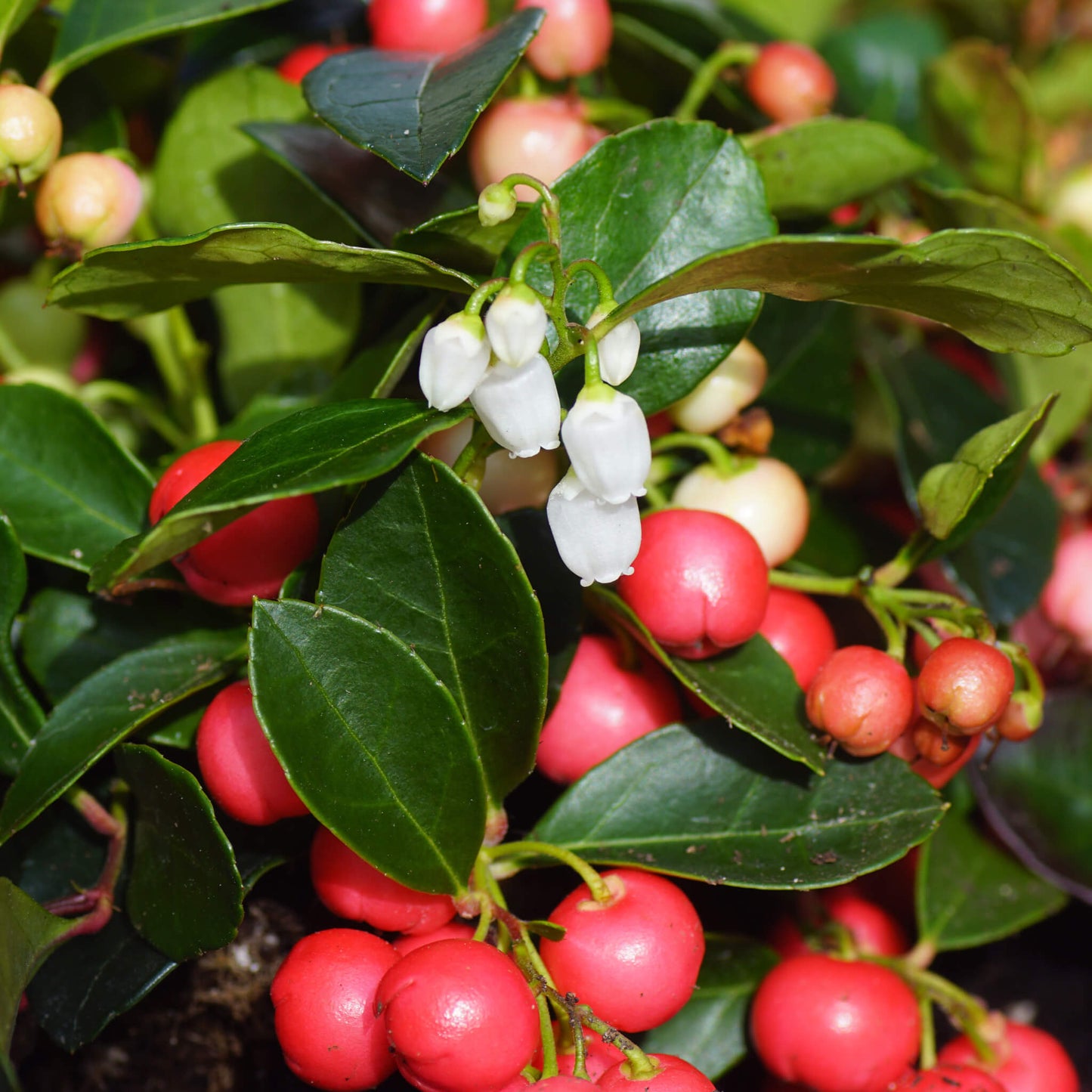
Wintergreen (Gaultheria procumbens), also known as Eastern teaberry, is a perennial native groundcover that thrives in coniferous and mixed forests, particularly in undisturbed areas due to its shallow rhizome depth. Growing up to 10 cm tall, this evergreen plant forms a dense mat of glossy, dark green leaves. Small, white bell-shaped flowers appear under the foliage starting in June, transforming into edible red berries in the fall. These berries, with a flavour reminiscent of pink witergreen mints, persist throughout the winter, providing a valuable food source for various birds and mammals. While wintergreen tolerates shade, it grows and blooms best in semi-open, acidic sites, making it ideal for areas with other acid-loving plants.
Medicinal and Culinary Uses
Wintergreen has analgesic, anti-inflammatory, and astringent properties. Its leaves and berries are traditionally used to relieve muscle pain, rheumatism, and headaches. In cooking, the mint-flavoured leaves and berries can be consumed fresh or brewed into teas. The berries are also used to add flavour to drinks and desserts, adding a refreshing taste.
Ecological Roles
Wintergreen is essential in forest ecosystems, providing a winter food source for birds and small mammals due to its persistent berries. As a groundcover, it stabilizes soil and helps prevent erosion in forest environments. Integrated into naturalized gardens or as a groundcover under acid-loving plants, wintergreen supports local biodiversity while adding an ornamental and edible touch to the garden.
Wintergreen seeds require a 90-day cold stratification to ensure germination. See the growing notes below for more details.
Akène cannot assume any responsibility for the use of plants for therapeutic purposes. Always seek advice from a professional before using a medicinal or edible plant.
Sowing and Growing
Technical Details
Seeds per packet: 150
Family: Ericaceae
Scientific name: Gaultheria procumbens
Life cycle: Perennial
Hardiness zone: 3
Soil type: All types
Soil moisture level: Medium to humid
Soil - additional attributes: Peaty. Acidic. Poor.
Drought tolerance: Low
Light: Part shade, shade
Blooming: June to August
Spacing: 45 cm
Height: 10 cm
Deer resistance: High
Stratification: 90 days
Scarification: No
Germination time: 10 to 20 days
Sowing depth: Surface