







For successful seedlings,
see the growing notes at the bottom of the page!
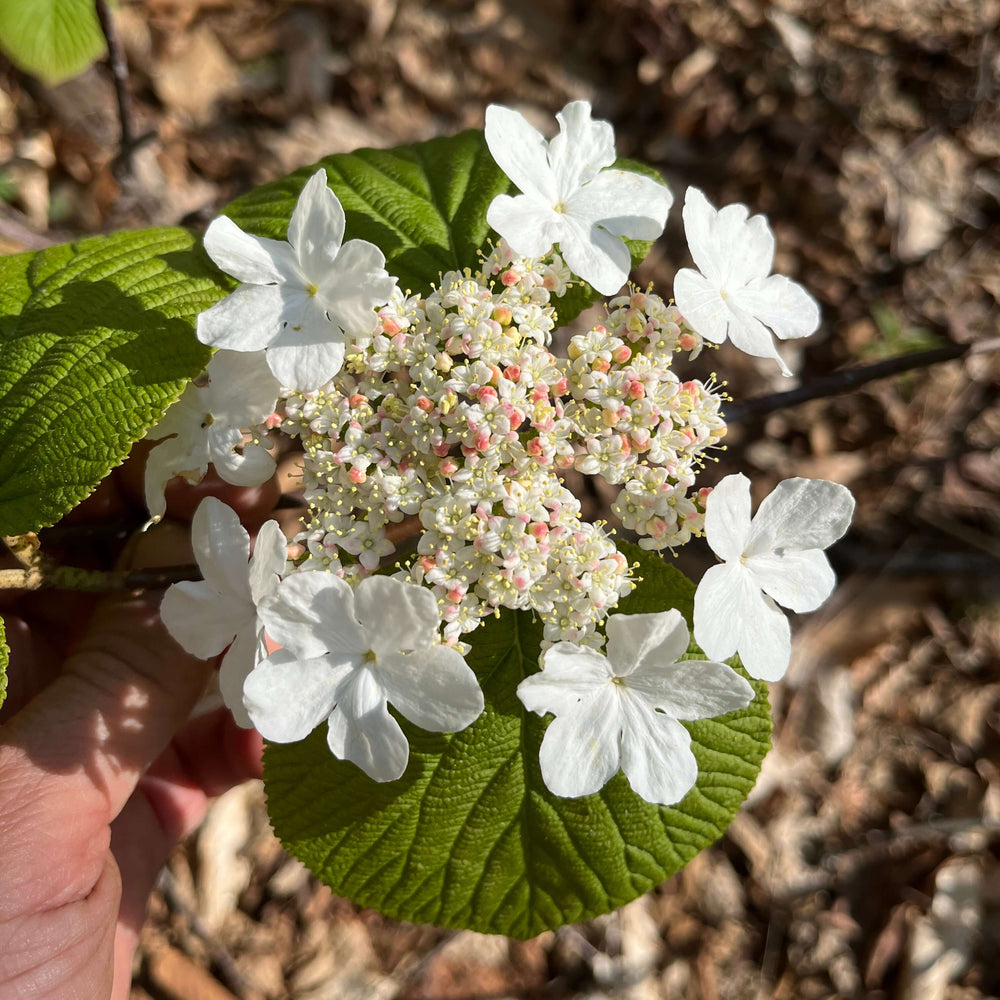
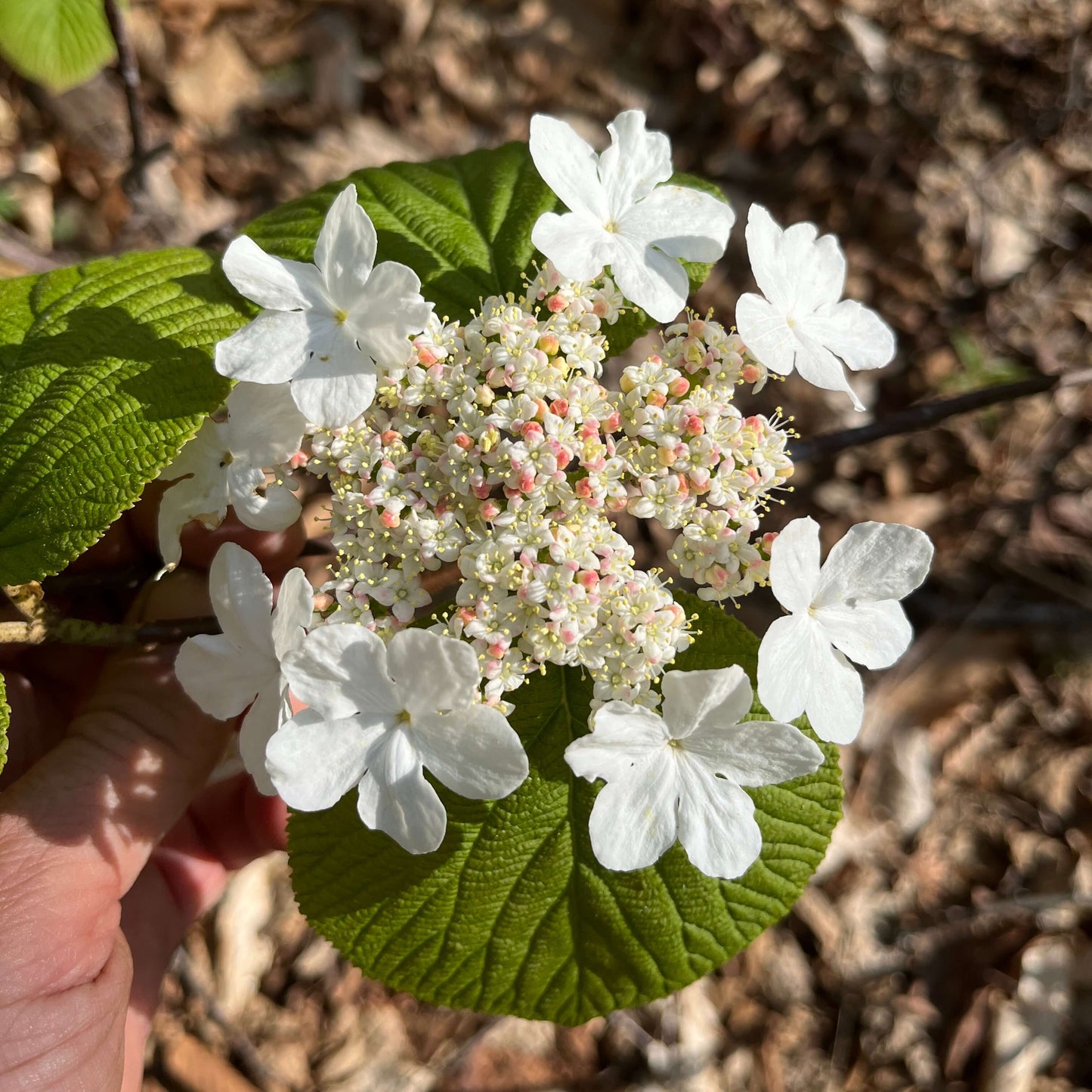
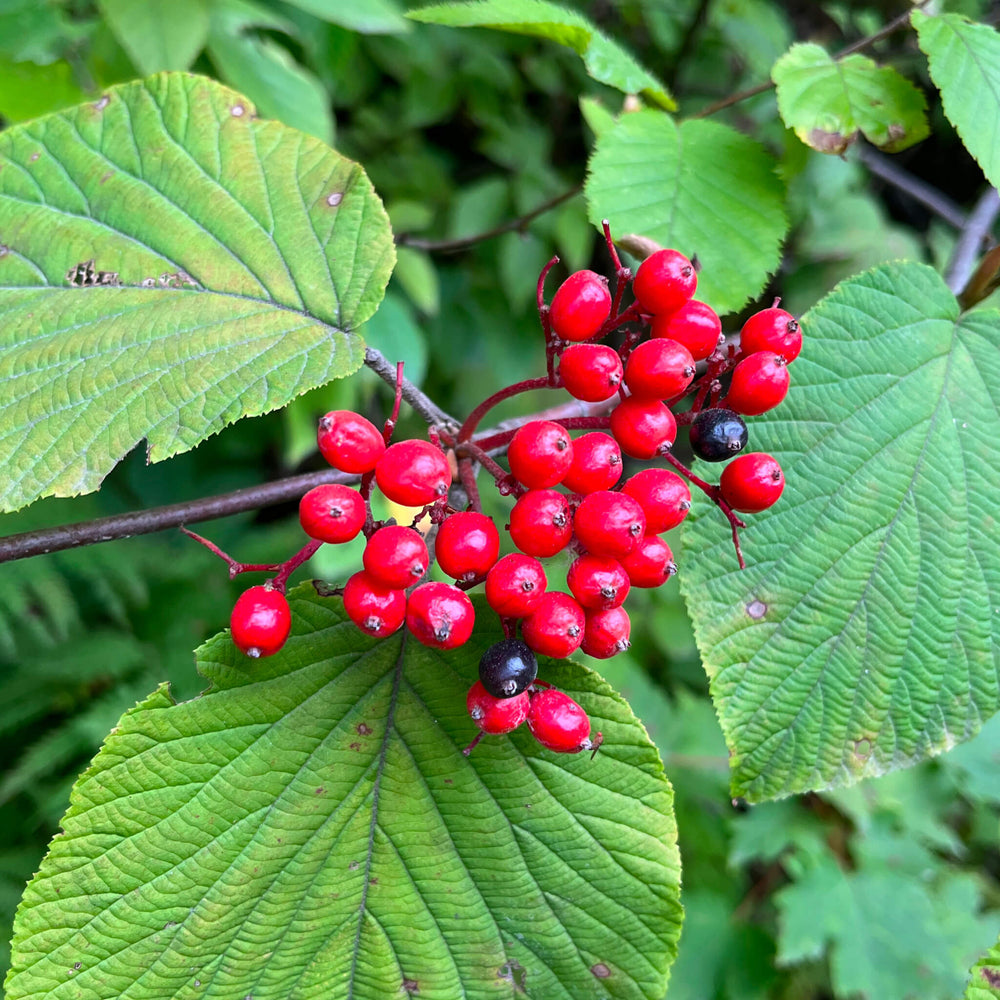
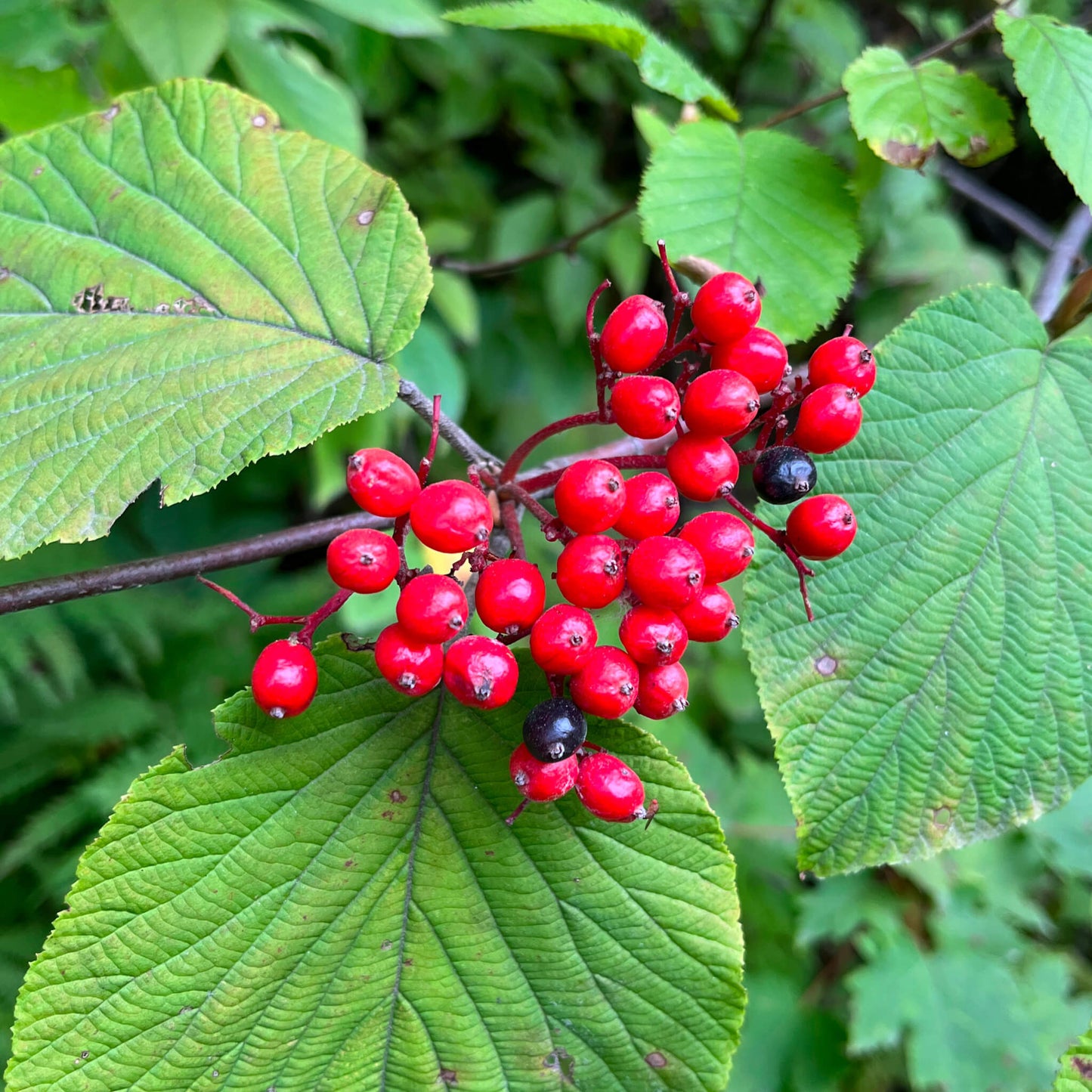
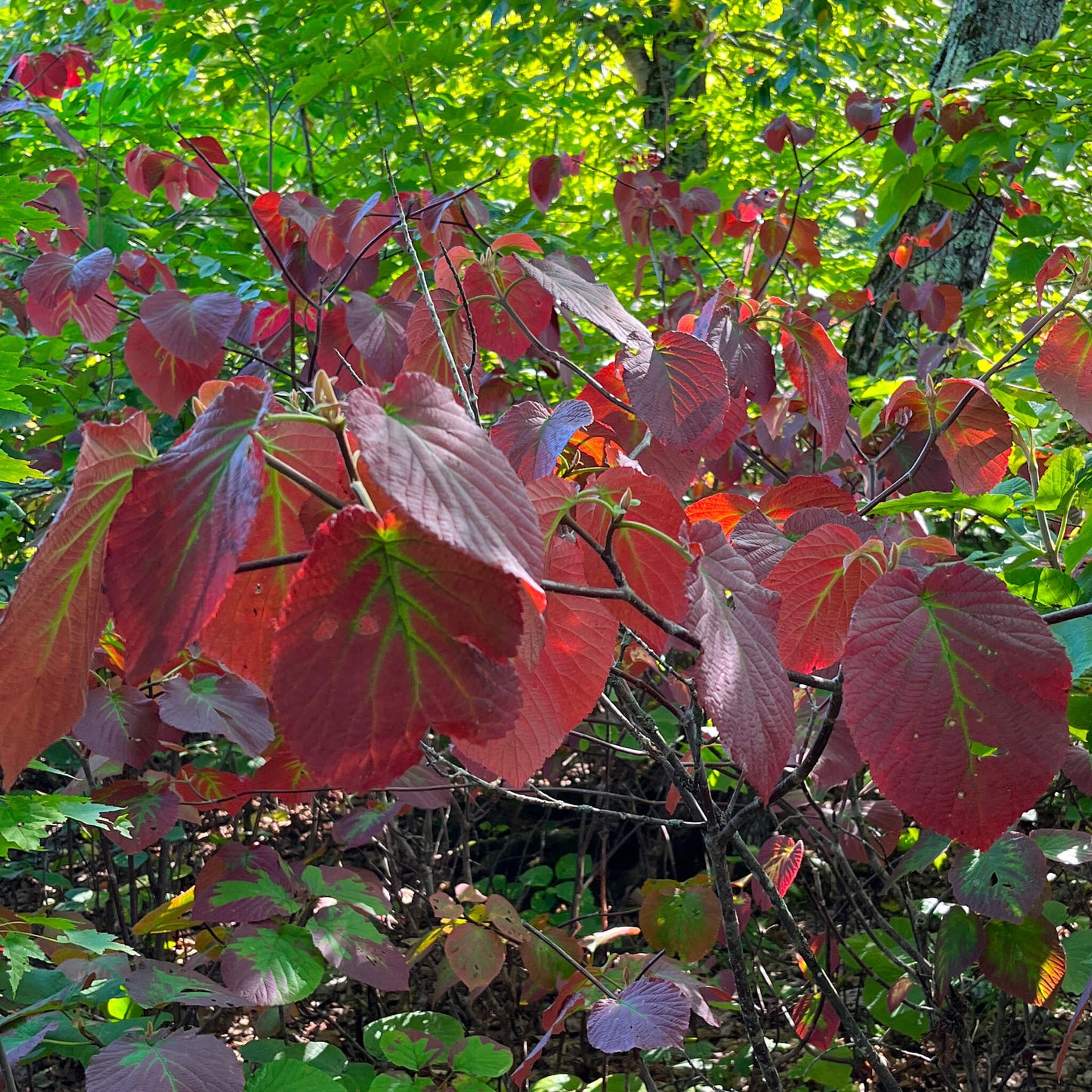
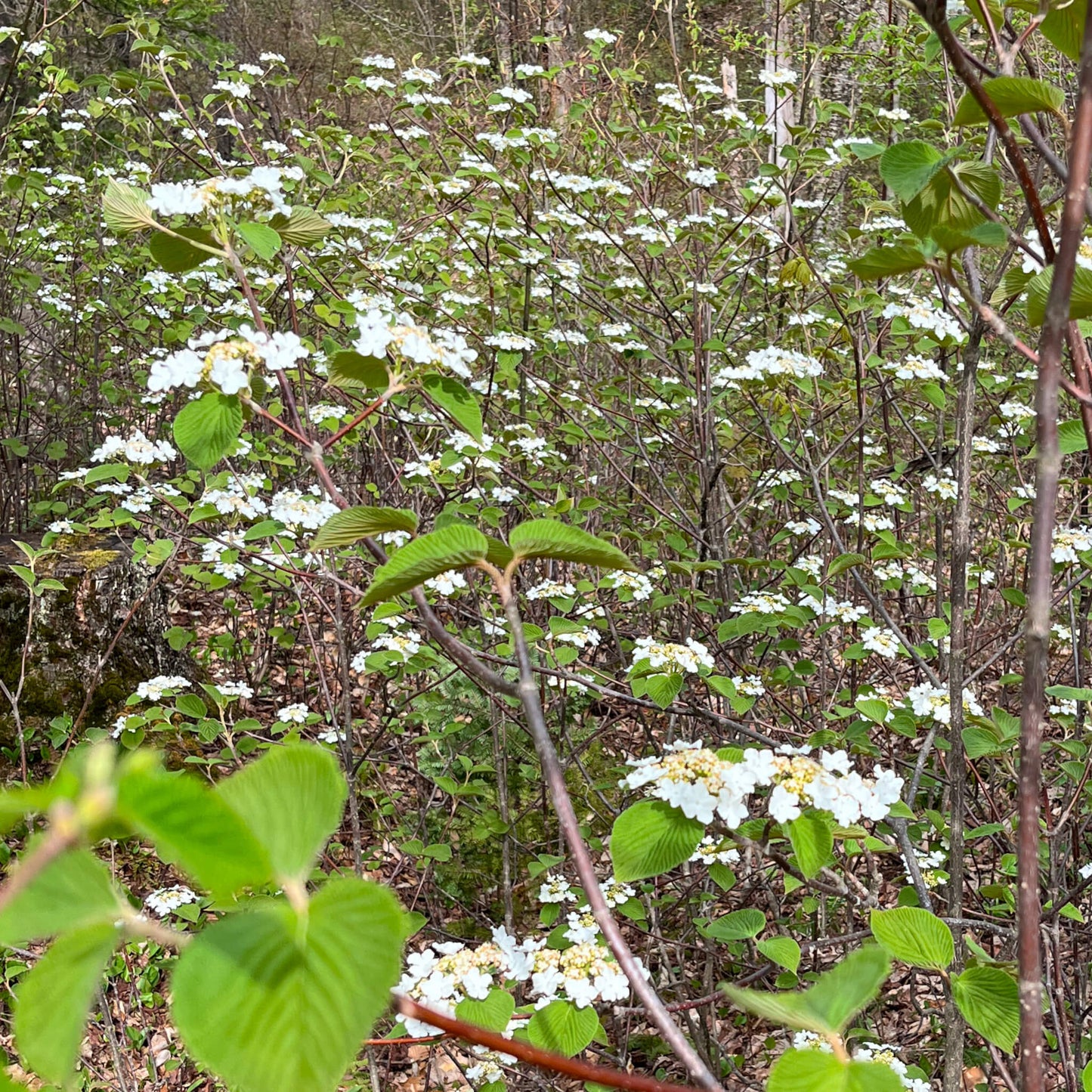
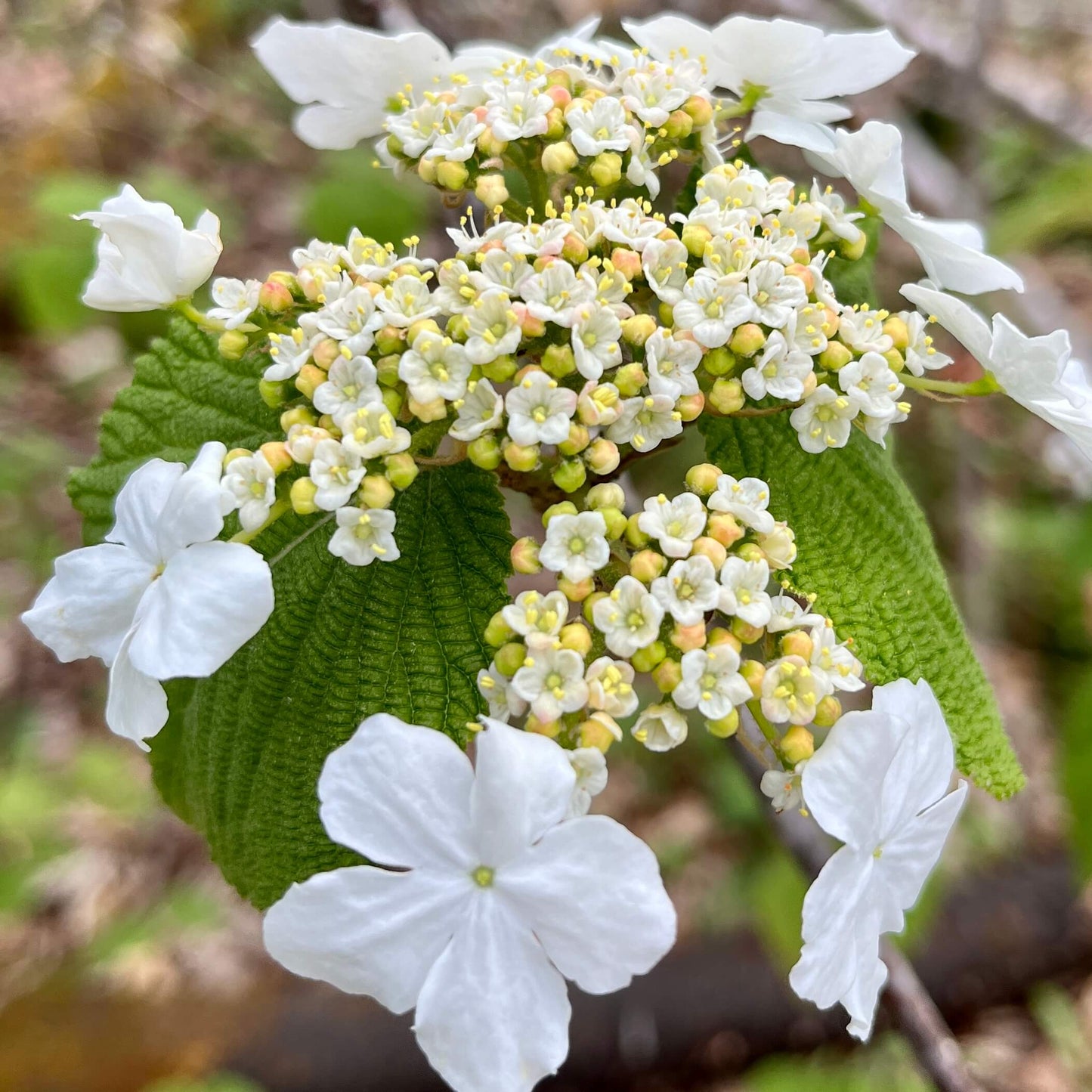
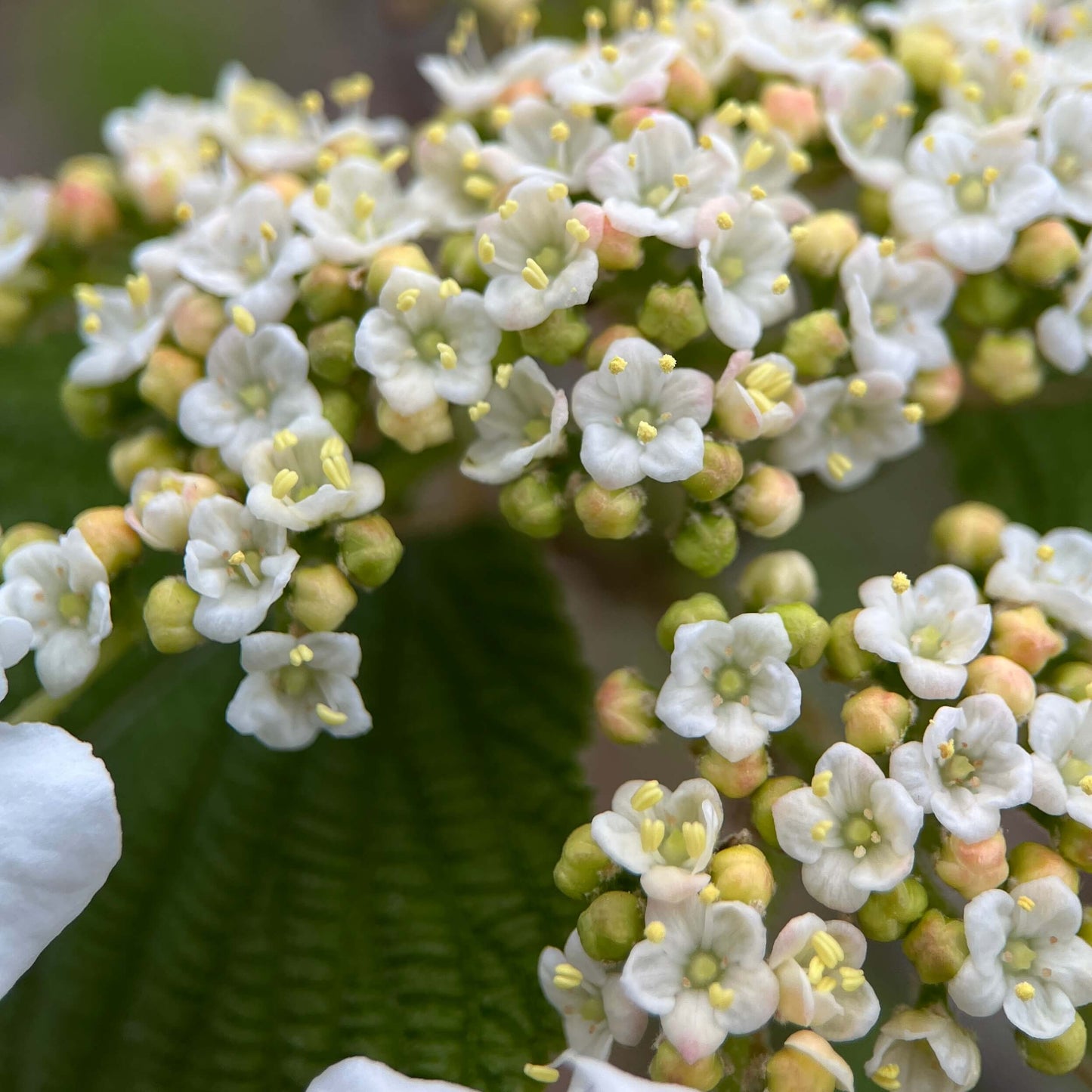
Hobblebush (Viburnum lantanoides) is a small native shrub found in eastern North America's forests, typically reaching up to 3.5 metres in height. Ideal for shaded gardens, hobblebush is distinguished by its large, rounded leaves that are dark green and velvety in texture, turning reddish-orange in the fall. Early in spring, it produces a majestic inflorescence, consisting of an outer ring of white flowers surrounding an inner cluster of small greenish flowers. These flowers attract numerous pollinators and make the shrub a host plant for the Northern azure butterfly caterpillar (Celastrina lucia). In the fall, the flowers turn into red berries that darken when ripe and are consumed by birds and small mammals, providing a food source during the cold months.
Furthermore, native viburnums (Viburnum spp.) are recognized as keystone plants for biodiversity in many North American ecoregions, as they support a wide variety of insects and birds that rely on their flowers, leaves, and fruits.
Medicinal and Culinary Uses
Hobblebush has astringent and tonic properties. Traditionally, its bark was used in decoctions to relieve cramps and soothe mild pain. Its berries, although edible when ripe, have a bitter taste and are therefore better suited for preserves or jams after cooking.
Ecological Roles
Hobblebush plays a crucial ecological role in the understory. Its flowers attract various pollinators in the spring, including bees and butterflies, and its berries provide a valuable food source for birds and small mammals in fall and winter. Its roots stabilize soil in forest ecosystems, and it contributes to biodiversity by forming small thickets through natural layering.
Upon receipt, it is important to place the packet containing seeds in the refrigerator until sowing.
Hobblebush seeds require cold stratification to ensure germination. See the growing notes below for more details.
Akène cannot assume any responsibility for the use of plants for therapeutic purposes. Always seek advice from a professional before using a medicinal or edible plant.
Sowing and Growing
Technical Details
Seeds per packet: 25
Family: Viburnaceae
Scientific name: Viburnum lantanoides
Life cycle: Perennial
Hardiness zone: 3
Soil type: Loamy to clayey
Soil moisture level: Medium to humid
Soil - additional attributes: Acidic. Rich.
Drought tolerance: Low
Light: Part shade, shade
Blooming: May to June
Spacing: 200 cm
Height: 350 cm
Deer resistance: Moderate
Stratification: Pre-stratified
Scarification:
Germination time: 20 to 90 days
Sowing depth: 10 mm
Reproductive system: Self-sterile hermaphrodite