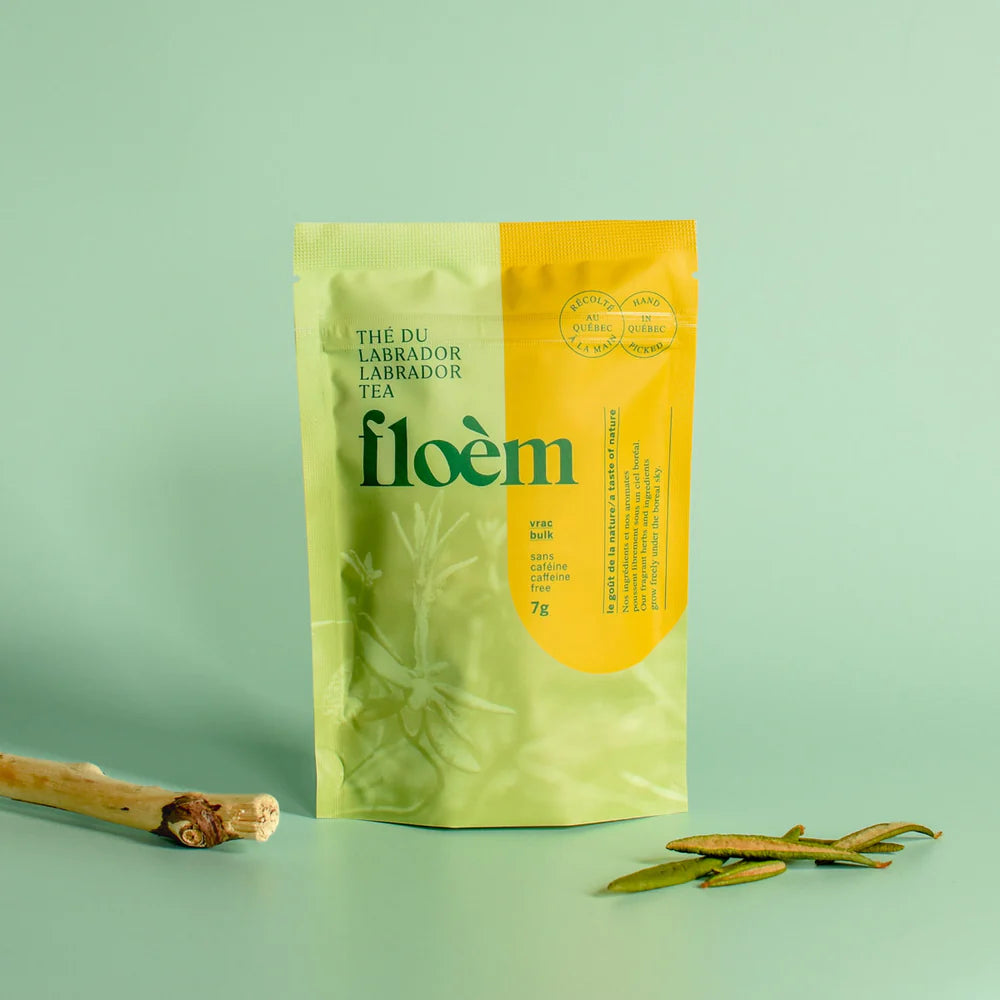
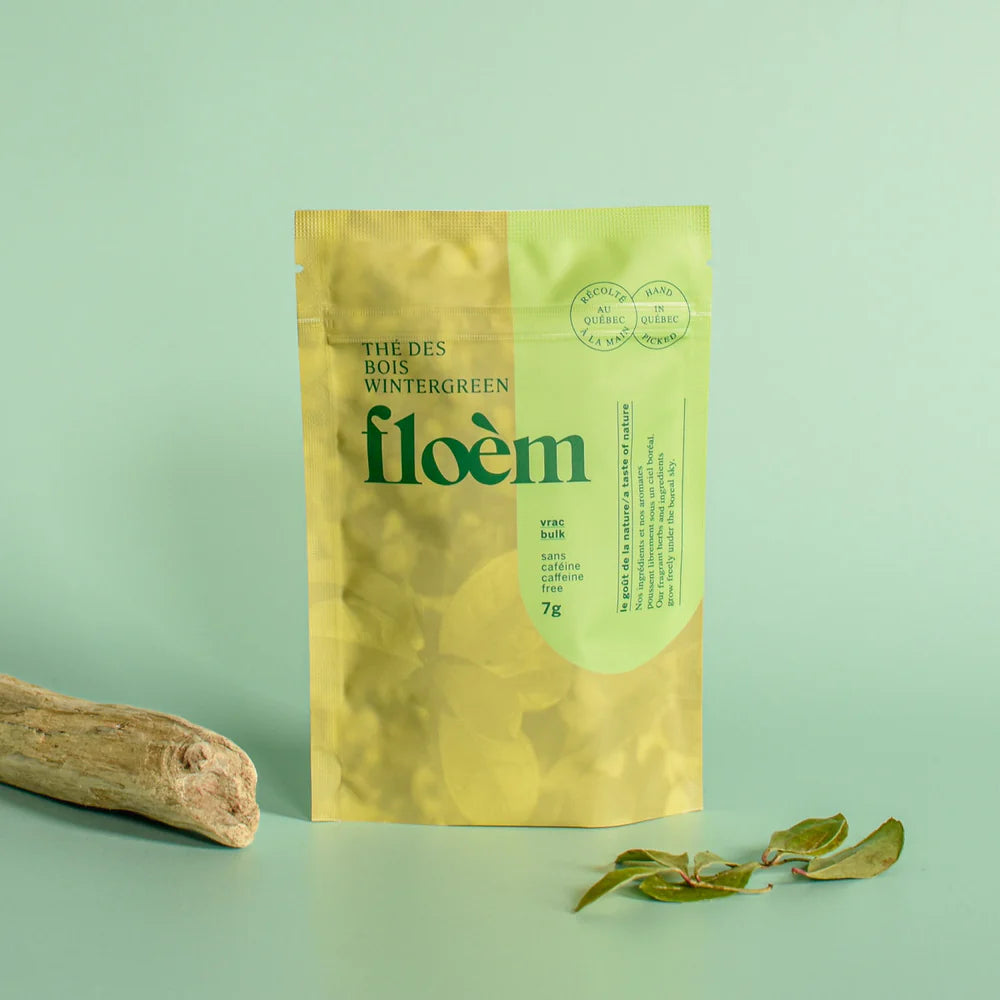
We are delighted to introduce Floèm, a Quebec-based company showcasing boreal flora. Their unique herbal teas are made from hand-picked ingredients foraged in Quebec’s wild landscapes, delivering an authentic and flavourful experience.
Description
Sweet gale is mainly used in cooking to season dishes of all kinds, such as stews, soups, etc. Sweet gale catkins are used in craft beer and microbrewery. Adding it to beers adds a touch of flavor and also froths them. They can also be infused to make a delicious boreal tea right here!
What Does Sweet Gale Taste Like?
Heaven, quite simply! As for its flavor, it oscillates between that of balsam fir and jasmine. When you want to qualify it, you can say it is refreshing, hoppy, slightly bitter, and peppery. It is still resinous, and some find it tastes like nutmeg. It’s a must-have aroma!
What is The Difference Between Sweet Gale And Sweet Gale Catkins?
The taste between the two is much the same. On the other hand, the catkins have a more intense, peppery, and very forest taste.
Learn More
It is an astringent herb. This means that it causes tension in the mucous membranes of the mouth. Also, this plant is abortive if it is taken during the first trimester of pregnancy. So, we recommend not to use it while you’re pregnant. In the past, sweet gum was used to repel insects in general and to make dye as well! If you’re the type to go on forest excursions in Quebec, you’ve probably seen him. Same thing if you go canoeing on our lakes since it is found there. You probably also got stuck with your boat in one of his plantations.
Benefits
Sweet gale is a plant with purifying and revitalizing properties. Its gentle, slightly spicy aroma promotes relaxation while supporting respiratory health. Ideal for purifying indoor air, it also helps relieve headaches and tension, bringing a sense of calm and clarity.
Ingredient
Wild sweet gale
Not recommended for pregnant women and children under 5 years old.
Taste & Flavour
An aromatic ingredient with a complex, resinous flavour that evokes the aromas of the boreal forest. Its catkins have peppery, woody notes with a hint of hops. Its slightly bitter taste can recall nutmeg, fir and even bay leaf.